Monday, September 20, 2010

Eggless Pasta Dough & Bucatini All' Amatriciana


This isn't a knee jerk reaction to the great egg recall of Summer 2010. I will say don't eat eggs from giant farms that look like that scene from Napoleon Dynamite where he gets paid for a day's work in change and drinks some deep orange drink with egg yolks stirred in to it. Was it all egg yolks or OJ or something?

It's because I wanted to make Bucatini all' Amatriciana, to which I've referred multiple times in recent posts about Rome. I got a new contraption thanks to a Williams Sonoma Gift Card from the wedding, the Kitchen Aid Pasta Press. Not a roller, but a press that forces the dough through plates to create noodles and shapes difficult to do by hand. Among the forms that can be created with it are one of my faves, Rigatoni, and one of the more difficult ones to find in stores, Bucatini.

Kitchen Aid only lists recipes for dough with eggs in them but I know traditionally rigatoni, macaroni and bucatini were semolina flour and water pastas, so I couldn't bring myself to use an egg dough. I had a feeling I might regret my decision, that the machine would reject it, but I am a stickler for tradition in these matters. I know we live in an era of abundance, but if the originators of the recipe made it with flour and water because they had to, then I'm going to follow suit.

The slight problem with making eggless semolina dough is in bringing it together by hand. The semolina makes for a coarse, tough dough, which is why I cut it 50% with unbleached all purpose or 00 flour. Dried pasta you buy in stores is comprised solely of semolina, which is really difficult to work by hand or even a non-commercial mixer.

I've been to the DeCecco factory in Fara San Martino (Abruzzo) and seen their production, which requires massive presses and kneading machines that take the semola and water mixture and force it into familiar shapes. The durum wheat semolina and water look too dry to come together, but with thousand of pounds of force they churn out a multitude of shapes and sizes. With just my two guns at home to help me I can't quite muster that kind of force, so I compromise slightly with the bit of white flour.

It helps considerably with any pasta dough to let it rest periodically during the kneading process. A three to five minute break will do wonders in terms of relaxing the dough and allowing it to become pliable again. Do it as much as you need to to save your triceps and transform the dough into a smooth ball.

If you don't have the attachment you can improvise as so many contadine did for generations.

Wooden skewers, stalks of wheat (grab some from the backyard) or the metal ribs used to provide rigidity to an umbrella can be used.

Take a bit of dough, roll it into a long dowel and cut off tootsie roll portions. Then take the instrument of choice, press it into the dough and begin rolling it back and forth.

This will flatten and force the dough outward, while also keeping it hollow. Time consuming, yes, but it can be done! I've made a Calabrian pasta called Scilatelle in just this way with, yes, wheat stalks.
As for the sauce, hailing from the little town of Amatrice, now in Abruzzo, it's tomato based but spiked with guanciale and usually some hot pepper. That's really it.

Garlic was probably always acceptable, but onions and herbs and anything else are seen as bastardizations in Rome, where the dish has been adopted as a local favorite (kind of strange because Amatrice is about 70 miles away). Top it off with salty aged pecorino and it's an easy to understand classic.


There's no reason why simple tomato sauces have to be bubbling gently for hours over a low flame. Sure, if you're braising braciole in it for Sunday sauce or something it needs time, but otherwise the tomatoes can break down and cook in as little as twenty minutes. This sauce is a perfect example of that. The guanciale adds a depth of flavor quickly with its porky intensity. It tends to be more intense than pancetta, coming from the cheek. But it's also difficult for me to get at stores, which is why I use American bacon. I want the porcine component to bring something more than pancetta can, so I like the smoky forwardness of the American style, in slab form. It's even more distinct than guanciale would be, but I think it works well.

Serves 4

Ingredients:

Pasta dough:
2 cups semolina flour
2 cups 00 or all purpose flour
1 cup water

Amatriciana Sauce:
3 32 oz. cans San Marzano Tomatoes
1/2 lb. smoked or unsmoked slab bacon, medium diced
1 tablespoon extra virgin olive oil
1 chili pepper, finely diced or 1 teaspoon pepperoncino
Chunk of aged pecorino romano for grating
Salt and pepper to taste

To make the pasta dough mix the flours in a bowl, then add the water and stir to combine with a wooden spoon. When the water has been incorporated and the spoon isn't really do anything anymore use your fingers and knuckles to work the mass into a loose dough.

It should still be quite dry at this point and a decent amount of flour left on the bottom of the bowl. Turn it out onto a work surface and begin kneading, with short rests in between as needed.

Once you've achieved a nice smooth ball wrap it in plastic and let it rest uninterrupted for 30 minutes before making the desired shape.

Bring a pot of water to boil for the pasta. Salt it abundantly.

In a heavy bottom pan or frying pan heat the olive oil over medium low heat. Add the bacon and let it cook slowly so it renders much of its fat without browning too much. When the bottom of the pan is coated with the liquefied bacon fat and most of it is rendered, add the pepper or pepper flakes and let cook for a minute or two.

Add the tomatoes and partially crush them. Bring the sauce to low boil and let it cook, stirring occasionally for twenty minutes or so for the flavors to meld. Season to taste with salt and pepper and keep it on a minimal simmer. This can be made a day in advance to improve flavor.

Cook the pasta in the boiling water, basically until it floats, about 3-5 minutes. Drain, and either toss into the frying pan and stir to combine, or drain to a serving bowl and mix with some olive oil, then top with sauce when serving.

Garnish with pecorino romano and enjoy.


Thursday, September 16, 2010

Tuscany I: Villa Bordoni


To prepare us for Tuscany before we left we bought some diffusers with scents like Tuscan Breeze, ate Toscani pasta from Pizza Hut, and we even tried to plan a visit to the Olive Garden Cooking School in Tuscany. But we weren't accepted because in our sample recipe we pushed the envelope too far with a five cheese ravioli and Nutter Butters crumbled on top.

Alright guys. I couldn't help note the way the tag of Tuscan is slapped on innumerable products to lend credibility. But I put effort into not being jaded, and I will say that although Tuscany seems cliche, it's really that spectacular to me. For all the photos and oil paintings of Tuscan landscapes I've seen, I can't get enough of them. And when we were actually there I wanted to just pull to the side of the road, take out a couple lawn chairs and soak the real thing in for hours.

Maybe that's why so many people who've been to Italy say it's the place they want to go back to, a place they'd like to have a second house. Because it's the antithesis of the rat race so many of us live in here. For instance, we arrived in Tuscany at the perfect time. Rome was great, but it's pazzo. Poor us. After four days there we were ready for some space, a lower tempo and greens-ery.

I can't say enough about how connected to the surrounding earth you feel there. We only drank wine from the Chianti zone during our stay, mainly bottles from vineyards in the hills encompassing Greve. There was no reason to drink anything else.

I'll only speak for myself and say it was an amazing experience, but I know Nicole appreciated it as well. It makes me want to move to northern California, where so much of our produce comes from, or just to upstate Connecticut, our own burgeoning small farm country.

Every morning we started the day with Villa Bordoni's exceptional fruit salad, and I know the fresh apricots it was filled with came from the tree on the drive up where they were littering the ground. It wouldn't matter even if the ones we ate were taken from the ground, 'cause I'd eat off it.

Aside from Siena, where we had the worst meal of the entire trip (Elio's pizza I reckon) the food was consistently good, made with care and utilizing raw materials of the highest quality. This is why you go to the country or the burbs in Italy to eat well without trying as hard. Proprietors know tourists still account for a big share of their income in places like Tuscany, but considering their surroundings it's hard not to be happy, and they can more easily maintain tradition that is challenging in constantly evolving city culture. If you serve produce taken from your garden or ingredients from local purveyors you trust, you're not going to want to cut corners and serve up mediocre dishes to people. You want the few products on any given plate to shine--Italian cooking in a nutshell. Think about it; you don't have to be in Italy to know how full of pride itals are about a lot of things, none more than food.

Villa Bordoni is perched a mile or so above the town of Greve, up a winding and very narrow road that gives you a little hell your first time up to it. But when you finally arrive there after about ten minutes and a mouthful of dust things mellow out very quickly. The staff are warm and genuine, welcoming you in for a drink to help settle you in to one of the twelve unique rooms in the estate once owned, like so many country villas, by a Florentine family. It had fallen on bad times and was pretty decrepit when the current owners found and bought it.

Whereas English gardens are proper and orderly, Tuscan gardens are wild and teeming, with lavender and huge bushes of sage dominating, honey bees and bumble bees buzzing all over the place and gorging on the variety of nectars. There were the requisite cypress lining the drive, some lemon trees in the back courtyard, olive groves around the perimeter of the house and grape vines in every direction. The sound of cicadas was ever-present, just pure summertime.

Staying in a villa, albeit a full service one with pool and restaurant, was definitely the way to go for us. You don't get it via day trips from the cities. You can certainly go the agriturismo route, very rewarding I'm sure, but we were newlyweds and we can't kid ourselves that we really wanted to rough it. Bordoni produces both olive oil and wine, which we sampled repeatedly, but neither are quite ready for retail yet. So you just have to enjoy them while you're there.

We originally thought we'd use the villa primarily as a home base for day trips all over the Tuscan map. Maybe take a dip in the pool after a long day of being out and about. But as it turned out we were very content to stay around Greve, hopping on the SR 222 occasionally to go between historic towns in the Chianti Classico zone, never straying more than an hour away.

I mean you have a pool, a full service and good restaurant on premises, a very friendly cat that lounges around the courtyard and the countryside to breath in, so why rush to leave?

We ate at Bordoni's restaurant for lunch and dinner a bunch of times in 4 days/nights, and the last time we went for the tasting menu, which changed daily. The above dish is Pappa al Pomodoro, tomato sauce thickened with old bread into a porridge, and this was served with some pancetta to garnish and a reduction of balsamic. Pappa al Pomodoro is right in my wheelhouse, a great use for old bread, peasant sustenance. I think of it more as a Fall and Winter dish because it's thick and sticks to the ribs, but served warm rather than hot it's just fine on a summer eve. The balsamic looked cool, but since it's not a Tuscan product I could have done without it, not that I made a stink though.

For the primo we had paccheri filled with pecorino toscano and ricotta in a tomato sauce, garnished with basil oil. Pecorino toscano isn't necessarily as salty as that of Rome, and cut by the creamy ricotta it was a cheese lover's delight. The sauce was a smooth and simply tomato with balanced sweetness and acidity. When I see a dish with paccheri on a menu I am probably going to order it.

One of the many local wines we drank during our stay. We almost forgot wine existed in other places for the time being. Not that chianti is the end-all of Italian wine, but the balanced acidity and tannins and the slight fruitiness pair so well with the cuisine of the area. We enjoyed the variations and nuances of so many different bottles from a pretty small geographical area.

For the secondo, some almost bloody beef tagliata from the renowned Falorni butcher down the hill in the main square of Greve, served with a salad of arugula and fennel. Nicole was a little put off by the straight-from-butcher-to-plate-with-a-short-stop-on-a-grill treatment, but it's a more rustic interpretation of bistecca alla fiorentina to me. A little fattier and harder to chew, but good natural flavor. Whether you liked it or not, it was quite a helping. The salad was very good; crunchy and peppery arugula, fragrant fennel in a nicely acidic vinaigrette to help digest all that cow.

For dessert a coffee flavored gelato with whipped cream and chopped nuts to garnish. Simple and refreshing, and so it goes in Toscana.

The best friend we made at Bordoni, Mima. She actually belonged to a family down the road who summer in Greve. Every day she'd come by the property and greet us in the morning on our way to the pool. Not a beggar, just a perfect fixture for the villa, often sprawled out in the sun on the stone patio by day, and there again at night wanting more attention.

I'm ready to go back and work for food and board picking grapes or olives during the harvest.

Thursday, September 9, 2010

Tuscan Bread Salad: Panzanella


I feel like I have to sell people on Panzanella, that the idea of a salad composed of moistened bread lacks appeal. Maybe for that reason a lot of American chefs and recipes propose it as a salad with old bread cut into cubes and toasted, basically croutons. But that's the lowest common denominator spin on it, and not at all like the real thing.

I like my panzanella homogeneous with all the elements close to the same size. That way the mound of shredded bread bits dominate, studded with diced vegetables along the way. Those who hearken back to the days when this would have been invented by those looking to stretch every morsel would say panzanella should just be the bread, some olive oil, maybe vinegar, and maybe a handful of olives or tomatoes (post 1492). But the chassis of pane makes for such a good vehicle that it can carry a wide range and varying weight of treats to make a complete meal.

With the setting sun of Labor Day, so too goes the Summer for most intents and purposes. The thrill is gone, or trill if you're French Canadian. This salad works best in Summer, when you tend to seek out crisp, refreshing and watery vegetables. But it can really be employed in any season with raw or cooked vegetables. I suggest though that the first time you make it you get it in while local tomatoes are still on the vines, the Sun is still warm and so is the comradeship.

The only finesse involved is in handling the bread. It needs to be quite old, soaked, then drained without mashing it into a breadball, then torn into bits. For this you will need a rustic, crusty bread. Sandwich bread, whole wheat bread, multi-grain, even most baguettes will not work. They tend to rip and disintegrate with minimal effort when pulled apart, and they become dense like a star turned black hole when wrung out. A ciabatta, a legitimately crusty Italian bread or artisan baguette, with their large irregular holes, will stretch a ways before tearing, and will spring back like a sponge when squeezed. Take a moment or two to visualize the breads I'm talking about and the texture needed.

The bread needs to age long enough that the moisture evaporates from the cells throughout the entire loaf, not just the surface. Kind of strange that you dry the bread out only to re-moisten it, but the air drying changes the properties. Reference my post several months back about Italian bread where I noted that I leave my loaves out and exposed for weeks, by which they last much longer and avoid mold that occurs when you wrap them in air-tight plastic. This dish is exactly why you naturally age bread and don't throw it away. I'll tell you a secret though; in a pinch I will accelerate the aging process by cutting the bread into large chunks and baking them at 225 for about ten minutes. Shhh! Nonna Crocifissa would spank me with the wooden spoon if she ever caught me!

When you think about it you can easily use a whole loaf of Italian bread to make this salad for four people. Don't think one loaf of bread will feed eight. So it's like eating at least four thick slices or so per person, a lot of carbs. But it's so good, especially with some sea salt and good olive oil, occasionally you have to just let it slide.

Serves 4 as a side salad, with some leftover

Ingredients:
1 loaf Italian bread, or equivalent volume of ciabatta or other rustic bread
2 large ripe tomatoes or equivalent weight of smaller ones
Handful of fresh basil
1 cucumber
1/2 to 1 cup olives, briny or oil-cured
Good Tuscan extra virgin olive oil
Optional: red or white wine vinegar
Sea salt & pepper to taste

Take your bread and make sure it's hard and thoroughly dry one way or another. I leave the crust on because I don't mind the contrast of the toasty tasting pieces and whiter pieces, and also because the founders of this recipe wouldn't have wasted anything. They might have used the crust for something else though, which you can too (crackers, bread crumbs). Cut it roughly into chunks a couple inches on each side. Prepare a large mixing bowl or deep dish with some water and place the bread in it and make sure the bread is submerged. Do it in batches if necessary.

Feel the bread after a couple minutes to judge whether it's soaked and softened yet. It should go from hard and unyielding to spongy. If it is soaked through, remove it. If not let it sit for up to twenty minutes. With moderate pressure in your hands squeeze out about 3/4 of the liquid in the bread. You're never going to get it dry, but you want it to stop dripping when you apply moderate pressure.

Place all the drained bread on a platter or in a food processor. If using the machine, pulse it a couple of times very briefly to chop it into irregular but mostly uniform in size pieces. By hand tear the pieces apart and place them in a salad bowl. Drizzle a generous amount of the olive oil on the bread, and vinegar if you like, then gently mix.

Prepare the other ingredients by chopping them into pieces similar in size to the bread. Add them to the bread and dress with more oil (don't be stingy), and vinegar if you'd like. Season to taste with salt and pepper and mix gently so as to keep the bread fluffy. This salad improves over time whereby the bread soaks up the liquid exuded by the other ingredients, melding flavors. You can prepare it several hours in advance, or the day before. Serve at room temperature or only slightly below.

There are all kinds of variations and additions: canned tuna, hard boiled eggs, beans, cheese, fennel, bell pepper, onions, arugula, corn, herbs galore, etc. Or make it apropos for another season like asparagus and favas in the Spring, roasted vegetables like cauliflower and broccoli in Fall or Winter.

Happy Birthday Mom Saponare!

Wednesday, August 18, 2010

Rome II

Better late than never...

After a sweaty morning at the Vatican, swing by the Pantheon to cool yourself down and get a little jolt with a granita from Tazza D'Oro. Sweetened espresso, frozen and agitated periodically so that little chards of crystalline ice form. Not like a snow cone or a slushy though, much much more delicate.

There's no need for crunching through uneven granules, nor does it just melt away as soon as it hits your mouth. Get it topped with plain whipped cream, which offers a smooth cushion for the ice as you roll it around in your mouth and it all melds and slowly melts away, with just some sweetness and coffee bean bitterness lingering.

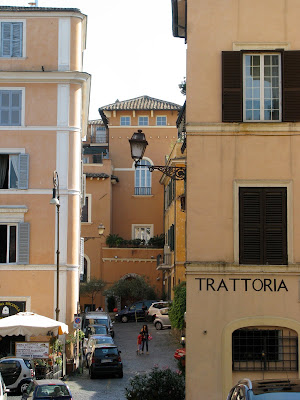
Another suggestion is to avail yourself of the many culinary treats of Roman Jewish tradition. If you're in and around the ancient forum and anwhere between it and the Tiber, you'll likely see signs for the Ghetto. Once a large section of the city marked out as the only area where Jews were allowed to live, it has remained intact for centuries despite shrinking to a couple piazzas and sidestreets. It is a very charming little sector now, with some of the most tranquil and quaint outdoor dining in the city, tucked just past the Teatro di Marcello and the Porto di Ottavio.

On one hand it's mere existence is a reminder of intolerance and oppression, on another it's fascinating to see that there are still kosher restaurants in this area and that the culture lives on. As for the food, things like baccala and whole artichokes fried in olive oil, pasta with pecorino and pepper, fish with raisins and pine nuts owe their identity to the jewish population of the city. They are as symbolic to all Romans as pasta alla carbonara or gnocchi alla Romana.

Antica Taverna del Ghetto - I've never been, but this is the quintessential ghetto restaurant (I mean that in a good way). Had we had more time or thought the time in Rome out differently we might have eaten here. May seem a little cheesy from the website but they do all the classics as well as some dishes that are typically non-kosher with kosher substitutes. A good opportunity to sit outside on the quiet street as well.


Sora Margherita - Actually not a restaurant but an "eating club". Because it's cramped and a fire hazard, to avoid zoning regulations they have you sign up to join their club when you walk through the doorless entry (just dangling beads), and then they serve up menus on construction paper. Nicole and I didn't eat here this time, but I've been before. If you want a nice bowl of pasta with ricotta and pepper or cacio cheese and pepper, some fried vegetables (get the artichoke!), ignore the lack of decor and go in for lunch.


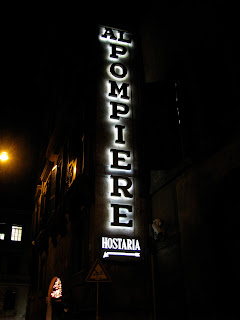
Pompiere - Old school. A couple blocks from the ghetto, big backlight sign on an otherwise dark and nondescript sidestreet. You open the door on the first floor and there's no indication it's even a restaurant. You walk upstairs though and the vest-wearing waitstaff greet you and usher you to a table in the spacious dining room with vaulted ceiling and lots of dark wood. Tables and wine glasses are small, tablecloths and napkins all one tone.

I wasn't sure if Nicole thought I was crazy for bringing her to an old timers place like this, but I think she knew it was here or a frustrating walk in search of an establishment I deemed acceptible, which could take hours. Not that it was dingy, just very different than the young, happening kind of places we were more inclined to visit. We sat next to a cute italian couple enjoying a quiet meal, with a group of several americans having a birthday party for one of their kids behind us. Soon after we sat down the lights went off and I thought "oh man, seriously?", but it was just the waitstaff bringing the cake out for the birthday girl. We're not so far away from home afterall.

We didn't even really need to look at the menu--we were both thinking pasta. Nicole surprised me with gnocchi in truffle sauce, a bit bold, but she has a soft spot for that combo. She also got some arancini (suppli in local parlance) to round it out for an app. I went for the fried artichoke and the carbonara.

We ordered a nice bottle of Montepulciano d'Abruzzo, served in little glasses, and spoke quietly to each other to maintain the median decibel level. The antipasti were served up quickly, hot out of the fryer. Both were very satisfying; we devoured the artichoke and worked on the piping hot arancini filled with peas and little bits of ham and held together by melty cheese. Neither was a revelation, but each was the kind of thing you could come back for time and time again. The plates were simple, unadorned but for the one item requested.

As two more italians sat down next to us and tucked napkins into their collars, the pasta came. I could smell the aroma of Nicole's truffles, but in front of me was the plate of spaghetti gilded with egg yolk sauce and a curiously conservative amount of black pepper. I dove right in and it didn't disappoint; abundantly salty from the generous amount of pecorino mixed in with the egg yolks, spiked with cripsee then chewy bits of guanciale. The dressing coated the strands of pasta and only left a tiny bit of residue in the bottom of the bowl. Nice job. Nicole scolded me for hunching over with my forearm permantly resting on the table shoveling the pasta in. I didn't think any of the other patrons would think anything of it.

Her gnocchi were light little pillows of potato, perhaps dressed a little too liberally with sauce. My tastebuds had already been done in by the salinity of my dish, so aside from the nice texture and easily discernable black truffle I couldn't get much out of it. Even without much flour to gum them up gnocchi are filling, and the pungent truffles add richness that prevent me from eating too much.

Nicole opted out of dessert and I had a lemon sorbetto which was quite runny but refreshing nonetheless.

You can tell this place had seen better days, perhaps thirty years or so ago being one of the standard bearers of this city for locals and savvy tourists alike. But the homey food and starkness by today's standards are kind of nice novelties, priced accordingly. If only it were on a more happening street and had tables outside. Bring a bunch of people though and you create the atmosphere. Or eat and then go a couple blocks to Campo dei Fiori, grab a drink and people watch.


Al Bric - Our last night in Rome and we decided on another wine bar in the Campo dei Fiori

neighborhood. This place is known for an expansive list of international bottles, but who are we kidding, we have no reason to drink anything other than the italian labels. We thought they might include lots of wines by the glass, something that is an established facet of wine bars in the States, but in reality not many places were structured like that in our travels.

We shot for eight o'clock dinner and were surprised to find it was quiet on a Thursday. As we sat down we noticed the nice arrangment of cheeses in the window and how many a passer-by stopped to take note before continuing on. No worries for us though, it wasn't displayed on plates with fake veggies or anything.
Al Bric is pretty small, split into a couple dining rooms with the branded sides of wine crates hung on the walls. Unlike at Cul de Sac a couple days earlier, we decided against small plates and both ordered pasta, with a plate of fritto misto to share first.

Doesn't take much to have swift service when only a couple tables are occupied, but the owner himself presided over much of the wine opening and decanting, and tasted ours himself rather than putting that responsibility on one of us. We ordered a bottle of Jermann "Vintage Tunina", a white from one of the Friuli's most heralded producers, particularly of whites.

It was a nice choice just to drink, but it certainly stood up to the mix of fried vegetables we had to start with. They were hot and still pretty crisp, fried in just flour. Needed some extra salt.

On the one hand we had an intimate setting where we could easily hear each other speak, but at the same time it might have been a little too subdued and as if the party were elsewhere. We were surprised this place would be almost empty when down the road a little in Piazza Navona I'm sure they were packing them in.

I saw Bucatini all' Amatriciana (long hollow noodles with a sauce of tomato and guanciale, some hot pepper) on the menu and I had to go for it, while Nicole was lured by lobster to accompany her paccheri (think rigatoni but thicker, larger in diameter and without ridges). Again, mine won the salt contest, not surprisingly, and the bucatini were a treat; since they're hollow, they're probably twice the diameter of normal spaghetti, adding so much more to chew on. The sauce is simple, quickly cooked and zesty. Nicole's paccheri were good (my favorite dried pasta) but they make you work a little by presenting the seafood in the shell. Overall I thought hers was a pretty good dish but not particularly memorable.

We finished our meal in pretty light fashion and passed on dessert. We were both satisfied but looking to take a stroll and grab a beer in Campo dei Fiori. Al Bric is probably a little more refined than Cul de Sac as far as a wine bar, but it lacks the outdoor seating of its counterpart, which can add a lot if there's not much atmosphere otherwise. We did small plates at one and more typical at the other, so it's a bit difficult to compare the two.

www.albric.it


Closing Thoughts on This Rome Trip:

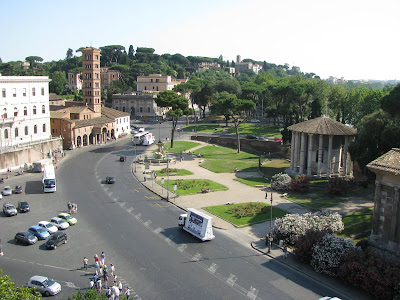
We chose wisely on the hotel by staying at the Fortyseven. We describe its location to people as "around the corner from the Wedding Cake". From the big monument it's about a five minute walk and a block in from the Tiber. Except when we took a city bus to the Vatican, we were able to walk to everything, including Trastevere which is right across the river from its address at #47 Via Luigi Petroselli.

Fortyseven is a boutique hotel, modern/art deco decor, seemingly small but with all the amenities we've come to expect and a pleasant staff. I don't believe in the sentiment that a hotel is just to sleep in and any deficiencies can be overlooked for that reason. I have to feel comfortable walking around barefoot in the room and know there's a good breakfast waiting for me in the morning. It helps when they can make a decent cappuccino too. Although if you're up for it, wait and grab one at a bar a little later at least once. The thing we enjoyed most though was the rooftop bar; being able to have drinks at sunset or after we'd come home from dinner any given night. Not all that common in Rome. And the location lends itself to a nice view of a park across the street, the river and beyond that St. Peter's. I'd choose it again.

We left Rome feeling as though we could have eaten better had we sacrificed more to eat the best of what the city has to offer for foodies. By sacrifice I mean going further afield to more "Roman" and less familiar areas, making it more of a mission to eat well. But eating was only part of the reason we were there, competing for time with sightseeing and relaxation. To seek out the places, to get to one nieghborhood when you're sightseeing in another and starving, requires planning beyond what we were willing to do this trip, which is ok. I've talked about it before so we both knew that going to Rome doesn't = awesome food at every meal without some legwork. And I think that bit of misgiving over what could have been just leaves the door open for a return.

The eternal city was sunny as I always remember it, full of vivacity, big crowds and busy streets. Manhattan is bustling but Rome is frenetic. I think of it as the center of the country to come back to after you've ventured out in all directions. And it's big enough that you could go back over and over and discover totally new things. We started our trip there and never returned, but no matter how many times I go I can always go back and just appreciate being in the city without an itinerary. Nicole appreciated just being there as well, but while she found Rome profoundly interesting, she admitted it was sort of overwhelming. Being used to American big cities, going to a place where people drive with only 2/3 regard for motor vehicle laws and cruise ship size tour groups are competing with you for space, you get that "aren't you glad you use Dial?" feeling sometimes. Even though there's something to be said for experiencing the diversity in aroma and intensity of others' stenches, especially when it's that cumulative kind built on days of not bathing.

Next stop Toscana for something completely different!

Some places on our Rome list that we didn't get to this time that I recommend trying:

Open Colonna

Glass Hostaria

Paris

Il San Lorenzo

Roscioli

Saturday, August 14, 2010

Sometimes I like It Greek Style


Mark Bittman, aka The Minimalist conjured up the recipe that formed basis for my spin in his column in the New York Times back June 24th, 2009 entitled "Nachos by Way Of Greece".

The first time I made it I pretty much copied his recipe, but I find the Greekness is suited to audibles on the herbs and spices, or variations on tzatziki and different meats. This most recent time I had dill in the cupboard, along with whole cumin and coriander seeds, so in they went. Instead of more traditional lamb I defaulted to a tried and true, cheap and nutritious ground meat, 93% lean ground turkey. Lamb certainly would have been more distinct, but the ground turkey is a good vehicle; cook it just until done to retain its moisture.

To throw another curve in, I decided to use a new gadget. I got a meatball griller from
Williams Sonoma a couple weeks back (on sale for $10 from $50) so I decided to form the meat portion of the dish into balls and grill them. Obviously a very different result than sauteing in oil, but it certainly worked. The turkey held up pretty well to the intense dry heat, retaining decent moisture, but my gut told me to use beef or lamb, and next time I will.

The only difference if you decide to grill the meat is to mix it together with spices of choice and the onions pre-cooked. If you have a meatball griller, portion them accordingly, otherwise you can form them into patties like burgers, or Kefta, which are long skewered patties made in the Middle East.

All assembled, the plate looks quite nice and it's a good weeknight meal because it comes together quickly. Nutritious, balanced, salty, the fullness of the smooth yogurt dressing everything makes it quite satisfying.

Ingredients (Serves 2 people with leftovers for lunch the next day):

Yogurt Sauce:
Plain Greek yogurt, at least 2% fat
Juice of 1/4 to 1/2 a lemon
1 tablespoon dry dill or fresh equivalent
1 clove garlic minced very fine
1/4 English cucumber finely diced
1 tablespoon Extra Virgin Olive Oil
Salt and pepper to taste

Garnishes:
3/4 English cucumber partially skinned, 1" diced
2 medium ripe tomatoes 1" dice, or 2 cups grape tomatoes halved
1 cup Kalamata or other briny olives, halved
8 oz. good feta cheese, 1" diced
Couple handfuls of fresh baby spinach to make up bottom layer of the plate

Meat Component:
1 1/2 to 2 lbs. ground lamb, turkey or beef, at least 7% fat
1 teaspoon cumin seeds or ground
1 teaspoon coriander seeds or ground
1 medium onion, finely diced
Salt and pepper to taste

Optional: Pita pockets, cut into quarters, brushed with olive oil and baked for 10-15 in a 350° oven

Optional Equipment:
Meatball griller

Make the yogurt sauce by folding the ingredients into the yogurt and checking for seasoning. This is not meant to be too salty but rather smooth and refreshing against the salty olives and cheese. Put it in the refrigerator until ready to serve.

Assemble the garnishes in individual bowls and set aside.

Grind the spices (if whole) in a spice grinder and set aside.

Heat olive oil on medium high heat in a fry pan or dutch oven and when it's hot add a couple tablespoons of oil. Add the onions and cook until softened and beginning to brown, 10 minutes or so. Add the spices and cook until fragrant, 2 minutes or so. Add the meat and break it up with a wooden spoon or masher. Increase the heat to high and cook until the liquid has evaporated and the meat is beginning to brown, about 20 minutes. Don't let it overcook and dry out though. Remove from the heat.

For the optional grill method: Dice and cook the onions low and slow before assembly until caramelize and soft, then let cool. Mix them in with the meat and spices, season with a teaspoon+ salt and pepper to taste. Place them in a meatball griller or directly on the grill and cook until finished, which will vary depending on the type of meat.


To assemble the dish, place some spinach on a plate, then add the warm meat. Begin garnishing with yogurt sauce, vegetables, olives and cheese in no particular order. Drizzle some olive oil to lubricate the spinach and serve.